

— At the beginning of the year, Corporation X was formed and 1,000, $10 par value stocks were issued. X receives the cash from the new shareholders and also grants them equity in the company. Use the expanded equation when you need to analyze equity composition, track changes in specific equity components over time, evaluate company performance, or make detailed financial decisions. What’s the difference between contributed capital and retained earnings? Like the basic accounting equation, the expanded accounting equation shows the relationships among the accounting elements.
- In this scenario, money from cake sale will be deposited in the bank.
- Applying this example to your situation and numbers can give you a comprehensive overview of your business’s financial state over time.
- Anything that can be quickly liquidatedinto cash is considered cash.
- The totals show us that the corporation had assets of $17,200 with $7,120 provided by the creditors and $10,080 provided by the stockholders.
- Retained Earnings represent the cumulative profits that the company has earned and retained in the business rather than distributing to shareholders as dividends.
- The information in the chart of accounts is the foundation of a well-organized accounting system.
A Few Sample Transactions
The equation can become quite complex when dealing with multiple share classes, complex dividend structures, or international operations. International accounting standards may also influence terminology and presentation. For instance, contribution margin companies following International Financial Reporting Standards (IFRS) might present equity components differently than those following Generally Accepted Accounting Principles (GAAP). Different companies and industries may use varying terminology for similar concepts.
Rearranged Expanded Accounting Equation
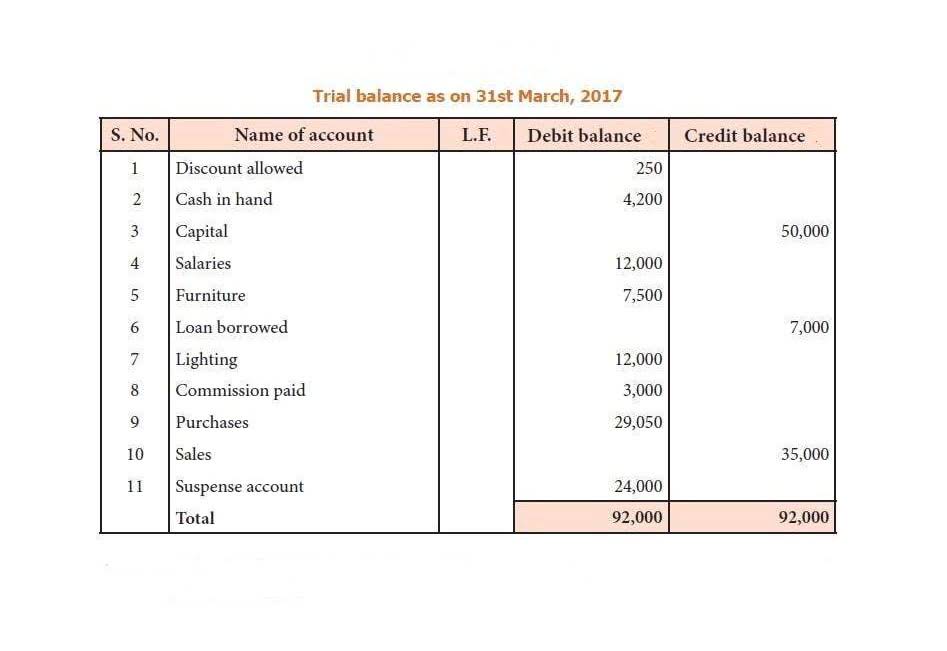
Total Record Keeping for Small Business debits and credits must be equal before posting transactions to the general ledger for the accounting cycle. The section of the basic equation which contains both the assets and liabilities remains unchanged in the expanded equation. Let’s look at some common problems that might occur in your day to day business, and how they are recorded in the accounting equation. Expanded Accounting Equation is the advance version of basic accounting equation.
Breaking down the components of the accounting equation
The accounting equation reflects that one asset increased and another asset decreased. By practicing and analyzing your financial statements through this lens, you’ll gain a robust understanding of your business’s financial health—thus steering it toward growth and stability. The expanded accounting equation, on the other hand, presents an in-depth analysis of a company’s finances. Cash includes paper currency as well as coins, checks, bankaccounts, and money orders.
It provides additional details of how an owner’s equity in the business changes over a period of time, and from which areas of the transactions of a business. It is imperative to note that in all business aspects, only the components of owner’s equity are changing, while there is no change in the assets and liabilities of any business framework. Examples of liabilities in an organization are loans, goods or services purchased by a consumer on credit terms and unpaid salaries to employees etc. The four elements inserted into the owner’s equity are the revenues, expenses, owner’s withdrawals, and owner’s capital. Cash includes paper currency as well as coins, cheques, bank accounts, PayPal accounts.
The Surprisingly Fast Way to Become Financially Independent (5 Powerful Levers)

The accounting equation, assets equals the combined value of liabilities and equity, is the foundation of accounting and double entry system. The equation signifies that all assets are financed either by borrowing funds or with shareholders invested capital. The key benefit of using the expanded accounting equation is the extra visibility it provides into how the various components of the equity section of the balance sheet change over time.
Examples of how to use the expanded accounting equation
Therefore, the company must record the usage of electricity, as well as the liability to pay the utility bill, in May. Before we explore how to analyze transactions, we first need to understand what governs the way transactions are recorded. Its complexity can overwhelm beginners, and the additional detail may not always be necessary for simple financial assessments.


The expanded equation breaks down the equity into more detailed components like common stock, retained earnings, revenues, expenses, and dividends, while the basic equation only reflects total equity. The expanded accounting equation is a vital tool in understanding the financial position of both sole proprietorships expanded accounting equation and corporations. By incorporating elements from both the balance sheet and income statement, it provides a comprehensive view of a business’s financial health.